SOCAN Comments on H.R. 471, the ‘Fix Our Forests Act’
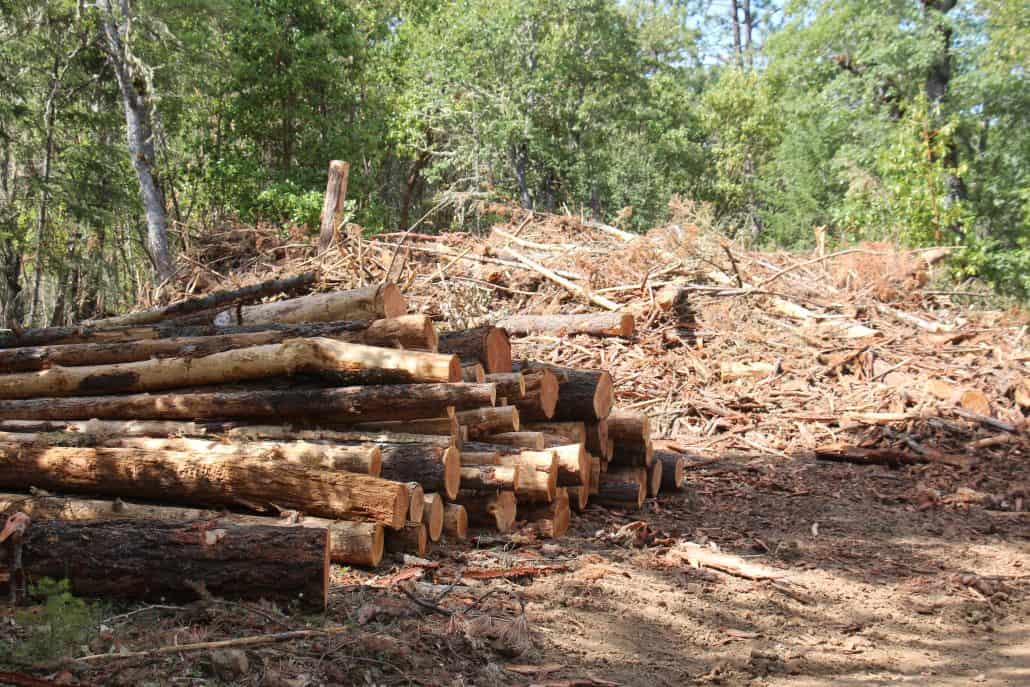
Combustible debris left after commercial logging operation in Jackson County, Oregon; Photo Alan Journet

Alan R.P. Journet Ph.D.
Cofacilitator
Southern Oregon Climate Action Now
https://socan.eco
541-301-4107
[email protected]
December 2025
Reference H.R. 471: The Fix Our Forests Act
Senator Ron Wyden; Senator Jeff Merkley, Congressman Cliff Bentz,
I write as cofacilitator of Southern Oregon Climate Action Now, an organization of some 2,000 Southern Oregonians who are concerned about the climate crisis and seek government action to address it. I write to express opposition to the travesty designated as H.R. 471, the Fix Our Forests Act (Congress 2025-2026). My reasoning follows but, in summary, I note that H.R.471 is seemingly designed to promote logging of our forests, thus compromising the ability of our forests to sequester carbon dioxide from the atmosphere, possibly the most valuable natural climate solution available to us. This effort is, to be sure, couched in apparently benign terms designed to seduce the casual reader, or the reader uninformed about forest management history and recent federal government actions, into supporting it as a route to addressing the wildfire threat many residents face. I explain this concern more fully below:
Wildfire Risk in a Changing Climate
The first point to note is that wildfire risk is being exacerbated by the unregulated climate change that this Administration is promoting through its refusal to accept the consensus science that climate change is driven by its ongoing support of fossil fuel extraction and combustion. The consensus tells us clearly that our ongoing and accelerating emission of greenhouse gases driven by the parallel accelerating combustion of fossils fuels, is promoting climatic conditions likely to induce increased wildfire risk across the world and the nation (C2ES undated; NASA 2025) but particularly in the western United States (NOAA 2023).
Trump Administration/Congress and Timber Harvest
While the Trump Administration touts its efforts to address wildfire risk by promoting new policies (TWH 2025), it is paradoxical that simultaneously this Administration is committed to reducing the capacity of federal agencies to address wildfires. As Price (2025) noted: “The Trump administration’s unilateral decision to make major cuts this year at land management agencies including the Forest Service and National Park Service drastically reduced the number of federal employees who can prevent and fight wildfires.” Taeoalii-Tipton (2025) also pointed out that the Trump Administration has been undermining science and emergency response systems and thereby contributing vastly to the problem. As Ehrlich 2025, and Merzbach 2025) report, the 2025 Budget Reconciliation Bill proposed a huge increase in timber harvest from public lands.
Identify cause of a problem before seeking a remedy
Before trying to address any problem, its cause should first be explored and understood lest proposed remedies simply exacerbate the problem; the cause for the increasing fire risk facing our forests must first be understood. As NASA (2025) for example, reports, because of climate change: “Extreme wildfire activity has more than doubled worldwide”, “Fire season is getting longer, and emissions larger”, and “Fire weather is becoming more common, and human activities are the main cause”. Meanwhile, Kreider et al. (2024) for example, report that fire suppression increases fire severity and impacts. This illustrates what any policy must address if it is to reduce the risk Americans face from wildfires. We should measure what H.R. 471, the Fix Our Forests Act (Congress 2025-2026) proposes against this requirement.
Likelihood that proposed remedies to Wildfire Threat address causes
As So (2025) pointed out, the 119th Congress and the second Trump Administration are populated by abundant climate science consensus deniers. This means expecting that anything emerging from this Congress or receiving this Administration’s approval would acknowledge the climate science consensus is unreasonable. Meanwhile, the potential for a Republican Congressional bill to address the cause of wildfires is equally compromised by a Congress and Administration that are both largely committed to ‘Getting the cut out’ (e.g. TWH 2025; Congress 2025b; Robertson 2025).
H.R. 471 states that “The term “hazardous fuels management activities” means any vegetation management activities (or combination thereof) that reduce the risk of wildfire, including mechanical thinning, mastication, prescribed burning, cultural burning (as determined by the applicable Indian Tribe), timber harvest, and grazing.” Although the proposal identifies a range of management activities, the fact that this includes timber harvest, and both Congress and the Administration (presumably including federal forest management agency leaderships) are committed to increasing timber harvest in our publicly owned forests, it is inevitable that other legitimate hazardous fuel management activities than harvest will be minimized while harvest will be maximized.
There is, however, abundant evidence that timber harvesting/logging is not a solution to the wildfire problem. As Schick and Burns (2020) reported following the catastrophic 2020 wildfire season in Oregon: “In the decades since government restrictions reduced logging on federal lands, the timber industry has promoted the idea that private lands are less prone to wildfires, saying that forests thick with trees fuel bigger, more destructive blazes. An analysis by OPB and ProPublica shows last month’s fires burned as intensely on private forests with large-scale logging operations as they did, on average, on federal lands that cut fewer trees.” Indeed, they added: “In fact, private lands that were clear-cut in the past five years, with thousands of trees removed at once, burned slightly hotter than federal lands, on average.” They added: “On public lands, areas that were logged within the past five years burned with the same intensity as those that hadn’t been cut, according to the analysis.” Many reports have indicated that harvesting trees is not a reasonable route if one wishes to decrease wildfire risk (e.g., Hanson undated; Dellasala et al. 2025). Figures 1 and 2 depict the fire hazard left after a commercial logging operation was completed in June 2025 on Griffin Lane in the Applegate Valley of Jackson Couty, Oregon. It doesn’t take a forest fire ecologist to appreciate how this array of slash piles and rejected logs could enhance the spread of fire rather than decrease it.
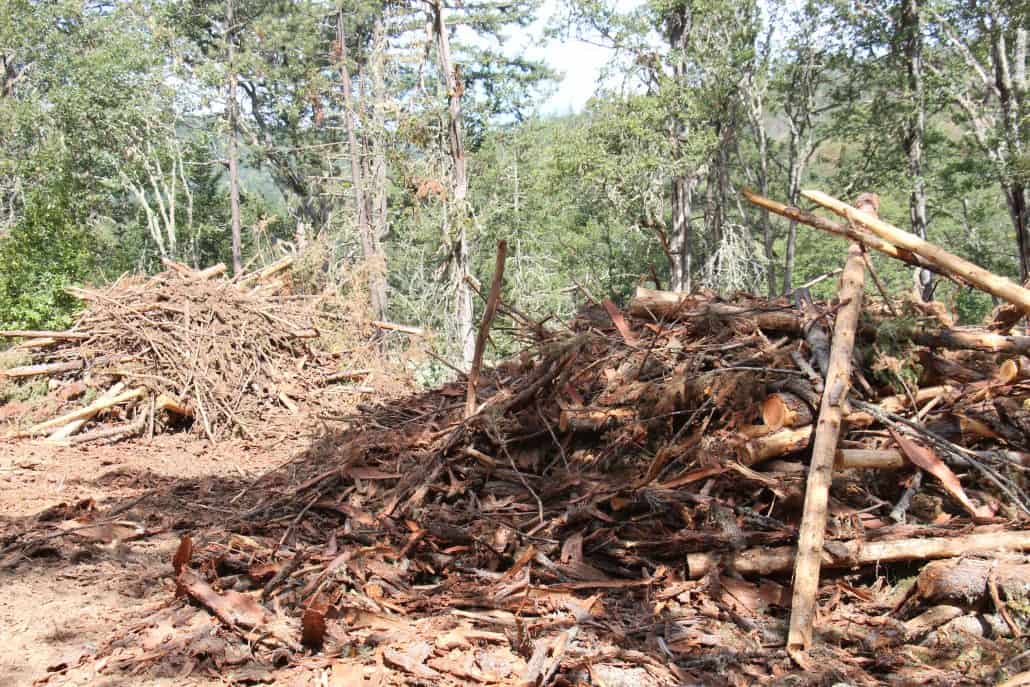
Figure 1 Logs and slash piles left after commercial logging operation on Griffin Lane, Jackson County, Oregon. Photo Alan Journet
Figure 2 Logs and slash piles left after commercial logging operation on Griffin Lane, Jackson County, Oregon. Photo Alan Journet
Levine et al. (2025), following a study of “five large wildfires which burned 460,000 ha in the northern Sierra Nevada, California, USA” reported that: .”the odds of high severity fire occurrence in these fires were 1.45 times higher on private industrial land than in publicly owned forests, an effect equivalent to a three standard deviation decrease in fuel moisture.” A similar pattern was reported by Downing et al. (2022) in relation to a study of fires that crossed boundaries (CB) from private to public and or vice versa. They concluded that: “CB fires were more likely to originate on private lands than USFS lands.” In other words, the premise implicit in the claim that timber harvest is a reasonable tactic to apply as H.R. 471 states, if one wishes to reduce fires is seriously challenged by research literature. The implication is that this option is included on H.R. 471 merely to serve the goal of timber corporations wishing to increase their profits rather than to serve the goal of addressing the wildfire risk.
Wildfire is more than just a threat.
On a related note, one aspect of this issue that H.R. 471 completely fails to acknowledge is the history and importance of fire in North America forests, especially the western forests. The implicit premise behind H.R. 471 is that all fires in our forests are bad. This false premise is particularly dangerous and uninformed. The western states in particular experience an unusual Mediterranean Climate characterized by a mild wet winter / warm dry summer cycle that has existed for eons (Bartolome undated) with fire a dominant presence influencing the plant communities.
As Lionello et al. (2006) pointed out, the Mediterranean climate occurs on the western side of continents between 30° and 40° latitude. Meanwhile, Mayer (2025) noted that this climate occurs on only 2% of the Earth’s land mass and Blumler (2005), in discussing the three kinds of Mediterranean climates, identifies them to occur in western north America, especially California and Baja California, Western S America, especially Chile, Western South Arica around the Cape (Cape Town), and finally, in SW and Southern Australia.
In relation to fire in these ecosystems, Moreno et al. (2023) launch their discussion of fire with the statement:” Fires are natural phenomena that historically have been part of the ecosystem in Mediterranean and semi-arid climates, and have influenced their genetic diversity and variability” In discussing this climate type, fire and vegetation, Keeley (2012) pointed out “Fire has been an important factor driving the convergence of these systems and is reflected in plant traits such as lignotubers in resprouting shrubs and delayed reproduction that restricts recruitment to a postfire pulse of seedlings.”: This author pointed out that drought increases fire risk in the short term by reducing humidity but decreases it in the long term by reducing available biomass. On the other hand, precipitation before the fires season reduces fire risk but precipitation well ahead of fire season increases biomass and thus fire risk. Ortega et al. (2025) introduce a discussion of fire in Mediterranean vegetation dynamics by pointing out that Mediterranean plants have adaptive strategies enabling them to withstand or recover from fire and that the severity and frequency of fires drive recovery dynamics. Furthermore, they point out that the fire regime in these ecosystems promotes the survival of certain species and has driven evolutionary development with such attributes as fire resistant seeds and seeds that are triggered by fire-related stimuli.
Marlon et al. (2012) studied the history of fire in terms of area burned in western states in relation to climate over several thousand years. They concluded that for some 3,0000 years the area burned has essentially followed the trajectory that models depicting forest area burned suggested should be evident. The essence of this study underlined how effective climate models are at suggesting what the area burned should be, given historical climate trends. The most alarming aspect of this study was the revelation that over recent decades, fire suppression has been so successful that it has reduced area burned substantially. Meanwhile, the recent climate trend indicates the area burned should have been increasing. The result is that western forests are currently experiencing a substantial fire deficit, meaning a far greater area should be burning than has been burning.
While fire has been well-demonstrated as critical to western forests occupying a Mediterranean Climate, these are not the only forests where fire is frequent and critical. In a brief summary of fire regimes in Missouri forests Dettenmaier and Swaty (2025) reported that the frequency with which Missouri’s fire-adapted ecosystems historically burned was every 2 – 20 years. They also note that because of fire suppression Missouri is experiencing a significant fire deficit parallel to the pattern reported above by Marlon et al (2012) for western forests. There should be little doubt that fire plays a critical role in maintaining healthy forests in many regions of the nation. This means federal policy should reflect the importance of managing fires rather than blindly suppressing them wherever and whenever they occur – to the profound detriment of or forest heath.
Summary remarks about H.R. 471
The evidence suggests that H.R. 471 is a thinly disguised effort to promote forest management that is superficially geared towards reducing wildfire threat without any recognition that fire is an important component of healthy forests and should be managed rather than automatically suppressed. Added to this concern is recognition among those monitoring agency activities that while providing the cover that it incorporates an array of forest management tactics that can be applied, H.R. 471 is really designed to encourage federal agencies to respond to White House and Congressional pressure to increase timber harvest by increasing logging The subterfuge inherent in this proposal is that it simply promotes timber harvest under the guise of protecting forests from wildfire. It seems to be a Trojan Horse wheeled into Congress by timber interests under the guise of seeking to reduce wildfire threats. It is regrettable that so many legislators seem to have fallen hook, line, and sinker for this obvious fraud.
Respectfully submitted.
Alan R.P. Journet P.h. D.
Cofacilitator
Southern Oregon Climate Action Now
https://socan.eco
541-301-4107
[email protected]
Link to pdf