Why Renewable Energy?
The Role of Energy in the Climate Crisis
The majority of global greenhouse gas emissions come from the burning of fossil fuels—coal, oil, and natural gas—for electricity, heat, and transportation. This combustion process releases massive amounts of carbon dioxide and methane into the atmosphere, intensifying the greenhouse effect and driving planetary warming. Our energy system is at the heart of the climate crisis. Transitioning away from fossil fuels is not optional—it is foundational. If we want to meet climate targets and stabilize ecosystems, we must fundamentally transform how we generate and use energy.
Why Renewable Energy Matters
Renewable energy sources—like solar, wind, geothermal, and hydro—offer a pathway to power our lives without adding more carbon to the atmosphere. Unlike fossil fuels, these technologies generate electricity without combustion, meaning they produce little to no greenhouse gas emissions. When scaled and supported with smart policy, renewables can meet the vast majority of our energy needs. They not only reduce climate pollution but also improve air quality, reduce water use, and promote energy resilience. In a warming world, every ton of avoided emissions counts—and renewables are a critical tool for getting there.
Fossil Fuel Risks Go Beyond Emissions
The dangers of fossil fuels don’t stop at carbon. Extraction and transport damage land, pollute water, and often occur near marginalized communities. Gas leaks, oil spills, and coal ash contaminate air and soil, creating long-term health and environmental hazards. Fossil fuel infrastructure locks us into a system that is brittle, polluting, and increasingly outdated. As climate impacts intensify—wildfires, droughts, floods—continuing to invest in this system is both economically and morally unsustainable. Phasing out fossil fuels is not just about emissions—it’s about protecting people, places, and public health.
Renewables Build Local and Global Resilience
In addition to reducing emissions, renewable energy systems offer greater resilience in a changing climate. Distributed solar, battery storage, and microgrids can help keep the lights on during extreme weather events—unlike centralized fossil plants, which can fail catastrophically. On a global scale, renewables reduce the geopolitical instability tied to fossil fuel markets. At the local level, they offer jobs, stability, and independence. Clean energy isn’t just a climate solution—it’s a resilience strategy, helping communities adapt while accelerating the global transition to sustainability.
A Just Transition Toward a Livable Future
The move away from fossil fuels must be not only fast—it must be fair. Climate change and fossil fuel pollution disproportionately impact low-income and frontline communities. A just energy transition means investing in clean power while protecting workers, honoring tribal sovereignty, and ensuring energy access for all. Renewable energy offers the chance to build a system that is not only cleaner, but more equitable. From the climate perspective, this transition is urgent.
From the human perspective, it is a moral imperative. The future depends on how boldly—and how justly—we act today.
For a quick review of the twelve-step explanation of the climate change problem, visit: The Twelve-step Climate Consensus
SOLAR
Conventional Options
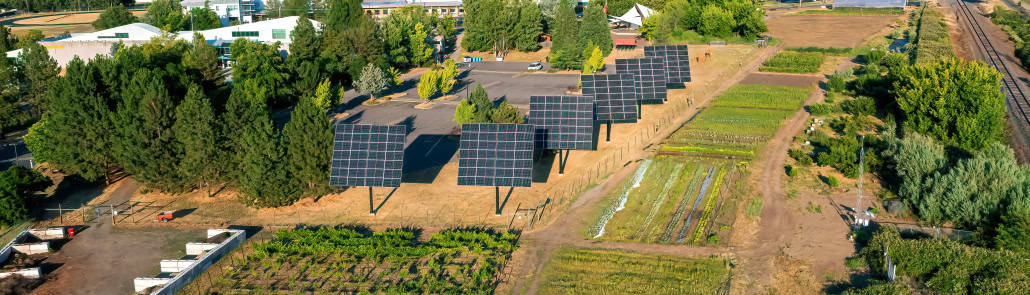
The most common approach to harnessing solar energy is to install solar panels on one’s roof (or as a stand array). From here, one can be grid-tied or off-grid.
Grid-tied solar users
Generate electricity from their photo-voltaic (PV) panels and pump into the grid that which they do not immediately use. Because Oregon is a net metering state, the producer earns credit for electricity not used and pumped into the grid. The energy builds up an account with the electrical utility which is then used during the night, or winter months when solar availability is less abundant and the generated power is insufficient to drive domestic needs.
During summer, the individual producer can generate sufficient electricity to cover their entire annual need at which point they have achieved net zero energy status and only pay to the utility a monthly fee based on the cost of the grid connection and its servicing (app $10). The advantage to this arrangement is that the producer can rely on the grid for night-time and winter back-up when their production is absent or inadequate. Meanwhile no battery storage is required.
Paradoxically, if the grid ‘goes down’ the solar panel owner is not independent to continue using their own generated electricity because their system also shuts down to protect power line technicians from being electrocuted by power generated from individually-owned solar panels.
Off-grid users
Have to store on-site the power they generate during ‘good times’ and use that store as a bank to power themselves overnight and winter.
The problems with batteries are:
(1) they represent an extremely toxic technology (in manufacture and disposal);
(2) batteries need to retain a certain percentage (maybe 10%) of their charge to remain effective so the full stated capacity is not available;
(3) batteries have a power rating that reflects how heavily they can be used to drive appliances.
Low capacity high power rating will run all appliances for a short while and high capacity low power rating will run a few appliances for a long time. The best choice will be the high capacity, high power rating battery, but these limitations mean batteries are less than 100% efficient at turning the power generated by the PV panels into available power.
Fortunately, battery technology is a rapidly advancing field so lower toxic, high capacity high power rating batteries are becoming more available. However, the above limitations, mean that the generation requirement will always be somewhat higher than the KWH requirement for powering appliances. However, off-grid users are clearly independent of any utility outages.
Unconventional Options
Not everyone owns a roof or enjoys land orientation that is amenable to PV cells. Renters are also particularly vulnerable since it would have to be the landlord who elects a solar array.
To combat these limitations, Oregon is developing rules to allow some for or community solar: a system whereby renters or homeowners can collaborate to own solar panels distant from their homes that pump electricity into the grid for which the distant homeowner earns credit. Whether we generate and use our own solar power, or pump into the grid solar power to replace what we use, society as a whole benefits from the greening of the grid.
Solarize Rogue and Sustainable Northwest gave a presentation on March 26, 2019 at the SOCAN General Meeting on their plan to help the Rogue Valley enhance its solar capacity. This program is available here in pdf format: 2019-0326 Solarize Rogue – Medford Town Hall.
For more information on this program contact Ray Sanchez Pescador with Solarize Rogue ([email protected]) or Bridget Callahan with Sustainable Northwest ([email protected]).
What About Community Solar?
Community solar offers households, renters, and small businesses a way to benefit from solar energy without installing panels on their own properties. Instead of individual rooftop systems, participants subscribe to a shared solar array—often sited on underutilized land or large commercial rooftops—and receive credit on their utility bills for their share of the power produced. This model expands clean energy access to those who may face barriers to traditional solar, such as shade, lack of homeownership, or upfront costs.
The structure is typically organized through utility partnerships, third-party developers, or cooperatives, with subscription sizes matched to the user’s typical electricity needs. Community solar programs are regulated to ensure transparency, consumer protection, and equitable access—especially for low- to moderate-income households. By pooling resources, communities reduce their carbon footprint, lower energy bills, and build local energy resilience, all while supporting the broader transition to a clean energy grid.
(Pacific Power customers)
The Beginning
In March 2019 a Town Hall meeting was hosted by SOCAN at the Medford Library. We talked about the concept of Community Solar since at that time, Community Solar was not a reality in Oregon. After a lot of work, by many different groups of people, the first Community Solar project in Pacific Power territory will be live very soon.
This OSF Community Solar project is a first in three ways:
- First “carve-out” project to be Certified in Oregon;
- First Community Solar project to be Certified in Pacific Power territory; and
- First “participant-owned” project in the state.
New Opportunities
The OSF Community Solar project was a pilot to test the practicality of the Oregon Community Solar Program and for us to learn what it takes to get the project done. Now, we are ready for the next project. We are actively looking for host sites and participants, so if you want to take advantage of the benefits that Community Solar projects bring to your community, please contact us. We’d love to hear from you.
Our first system is a Subscriber model, with no 25-year upfront investment! The cost of developing the system is financed with grants and loans. Each Subscriber pays for their portion of the system upfront on a yearly basis through a power purchase agreement. Subscribers can decide to resubscribe or cancel on an annual basis.
OWNERSHIP
Fractional Owners pool their financial resources to pay for development of a solar photovoltaic energy system. Each Fractional Owner’s portion of the solar electricity production from the system for 25 years will show up as a kiloWatt-hour (kWh) credit on their utility bill every month, just as if the panels were on their own roof.
If you would like to connect with or learn more about the Ashland Solar Cooperative, go to our website: ashland-solar.coop or send an email to Jim Hartman: [email protected] or text Jim at 541-821-1300.
Oregon Clean Power Cooperative
A Brief History
Oregon has historically had a hard time attracting investment for solar projects for governments, non-profits and other community groups. Most private investors in the renewable energy arena preferred to put their money into solar projects in California or the East Coast, where energy prices are significantly higher than in the Pacific Northwest.
Those few groups in Oregon who tried to come together to finance their own community solar projects found themselves hamstrung by securities requirements. Writing and filing the financial prospectus required to attract investors was complicated and expensive, a burden which sunk most community-scale solar projects.
In 2014, Oregonians for Renewable Energy Progress (OREP) approached then-Sen. Bruce Starr (R-Hillsboro) about introducing a community solar bill in the Oregon legislature. The result, SB1520, neatly solved the problem by allowing Oregonians to come together in cooperatives to finance renewable energy projects in their communities, without having to file a complex financial prospectus. Oregon law already exempted certain cooperatives – agriculture, fisheries and coops of mobile home park residents – from securities registration. SB 1520 simply extended that exemption to the category of renewable energy cooperatives.
SB 1520 passed both the Oregon Senate and the Oregon House nearly unanimously, and was signed into law on March 13, 2014. An extended rulemaking period followed, where the Division of Finance and Corporate Securities of the Oregon Department of Consumer and Business Services, wrote rules governing the cooperatives. Those rules, were finalized on October 6, 2014. On May 6, 2015, the Oregon Clean Power Cooperative was incorporated.
Our first system is a Subscriber model, with no 25-year upfront investment! The cost of developing the system is financed with grants and loans. Each Subscriber pays for their portion of the system upfront on a yearly basis through a power purchase agreement. Subscribers can decide to resubscribe or cancel on an annual basis.
OWNERSHIP
Fractional Owners pool their financial resources to pay for development of a solar photovoltaic energy system. Each Fractional Owner’s portion of the solar electricity production from the system for 25 years will show up as a kiloWatt-hour (kWh) credit on their utility bill every month, just as if the panels were on their own roof.
If you would like to connect with or learn more about the Ashland Solar Cooperative, go to our website: ashland-solar.coop or send an email to Jim Hartman: [email protected] or text Jim at 541-821-1300.
Pacific Power Blue Sky Program:
Blue Sky renewable energy program and help bring new renewable energy facilities on-line. Support renewable energy in fixed price, 100-kilowatt-hour blocks of 100% Western region wind (30%) and solar (70%) energy and help fund new, community-based projects in your state.
The cost is $1.95 per 100-kilowatt-hour block per month.
Arcadia Power
Arcadia was founded in 2014 on the belief that everyone deserves access to clean energy. Our initial investment in community solar drove progress toward that vision — then we built the Arcadia Platform to solve for access to energy data. Today, we help businesses navigate today’s complex energy landscape to unlock a future of abundant, affordable clean power.
Offshore Wind & Ocean Energy
What is Offshore Wind?
Offshore wind energy presents a transformative opportunity for Coos and Curry counties, positioning Oregon’s south coast as a leader in the state’s clean energy future. With some of the strongest and most consistent wind resources in the nation, our coast is uniquely suited to host floating wind platforms that can deliver large-scale, reliable power. These technologies—already tested in Europe and along the East Coast—are capable of generating thousands of megawatts, enough to power hundreds of thousands of homes while reducing our dependence on fossil fuels.
Beyond environmental benefits, offshore wind can deliver real economic development to coastal communities. From union-built port infrastructure upgrades in Coos Bay to new training opportunities in welding, marine operations, and turbine maintenance, this transition offers family-wage jobs and long-term investment in local talent. By building and maintaining wind infrastructure locally, we keep energy dollars in our region—circulating through small businesses, schools, and service providers instead of leaving the community.
Most importantly, offshore wind unlocks a path toward energy sovereignty. Today, the south coast imports the majority of its electricity—subject to outages, rising rates, and distant decision-making. Offshore wind flips that script. With community-centered development and transparent planning, we can ensure that local power generation serves local needs, and that the transition to clean energy reflects our values of stewardship, equity, and resilience. The wind is already here—it’s time to make it work for us.

Biomass – Geothermal – Hydropower