
Importance of Local Action’s
Beyond the Billionaire Bait-and-Switch
It’s easy—and sometimes tempting—to let the enormity of global problems lull us into inaction: “What difference can my block raise or community garden make, compared to a billionaire’s jet-fueled globe-trotting habit?” While it’s true that the ultra-rich outweigh average households in carbon emissions, this critique obscures a vital truth: collective local action remains essential. When we mobilize our neighborhoods—planting trees, hosting repair cafés, instituting weatherization programs—we strengthen social ties, build political will, and create replicable models. Local efforts set expectations, shift norms, and demonstrate tangible progress. They don’t excuse corporate or individual overconsumption, but they reveal how democratic, grassroots change can catalyze broader policy shifts and make everyday life more resilient and vibrant.
The Power of Nudges in Everyday Action
Drawing on the insights of Richard Thaler and Cass Sunstein’s Nudge, community-based initiatives can deploy subtle shifts—“choice architecture”—to foster better habits without banning options or resorting to mandates. It’s about making recycling the easiest choice, framing healthier local food options as default, or routing walking paths past public art—designing environments so that doing the “green thing” feels natural. These nudges operate beneath awareness but accumulate in impact. They enrich civic ownership, not through guilt or coercion but through smarter design that guides collective behavior toward shared goals. In essence, local action powered by nudges transforms ordinary environments into democratic laboratories where sustainable practices can effortlessly take root.
Why should we Nudge our Neighbors?
– Small shifts, big outcomes: Nudges don’t require sweeping reforms to be effective—they work by altering the environment just enough to make sustainable choices more likely. From default settings to visual cues, these adjustments steer collective behavior without limiting freedom.
– Behavior over belief: People often act out of habit, not principle; nudges recognize this and help align everyday actions with long-term goals. This means we can move the needle on climate outcomes even when beliefs or awareness lag.
– Scaling made simple: Nudges are low-cost, easy to replicate, and scale organically across communities. Once embedded, they create self-reinforcing loops—where good behavior becomes the norm, not the exception.
For a quick review of the twelve-step explanation of the climate change problem, visit: The Twelve-step Climate Consensus
Local Projections
Alan Journet
Southern Oregon Climate Projections
Thanks to the efforts of the U.S. Forest Service Mapped Atmosphere, Plant and Soil System (MAPPS) team at Oregon State University, global projections used in the Intergovernmental Panel on Climate Change 2007 Fourth Assessment Review (FAR) have been downscaled to allow a vision of the probable trends in the Rogue Valley for the coming century. Those data were used in the production of a 2008 report entitled ‘Preparing for Climate Change in the Rogue River Basin of Southwestern Oregon’ by Doppelt, Hamilton, Deacon Williams, and Koopman. The projections reported here are derived from the data from which that report was written. Consequences are derived from that report and other sources as indicated.

This graph identifies the historical temperature trend (black) and the projections according to three General Circulation Models: MIROC is Japanese, Hadley is British, CSIRO is Australian. These models exhibit patterns typical of the array of models available but were used by the MAPSS group because they incorporate variables important for the forest analyses they were undertaking. The projections in each are based on the ‘Business As Usual’ scenario meaning that they assume we continue doing what we have been doing without much effort to adjust our behavior. Regrettably, this seems to reflect most accurately our likely behavior.
The projected temperature changes reported here are based on comparisons with actual 1961—1990 averages when the annual temp. was 50.0⁰F, winter temp. was 38.1⁰F, summer was 63.6⁰F and August was 66.0⁰F
Notable among these are the comparisons between the historical pattern and the 2035-2045 and 2075-2085 averages. As the table below indicates, by the latter period, our annual increase may reach over 8⁰F, while the summer average increase may reach nearly 12⁰F and the August increase alone could be nearly 17⁰F above the historical pattern.

Even ignoring any other potential consequences the projected temperature increases alone would be devastating to our natural systems – our forests, woodlands, grasslands, wetlands, savannas, rivers, and lakes. A couple of degrees might be manageable, but 8 degrees would probably exceed the tolerance of these systems. Our agricultural and forestry activities would likewise be severely compromised – threatening the livelihoods of those directly and indirectly living off the land.
For a more extensive single page summary of Rogue Valley projections and major consequences click here.
For reports on selected other regions in Oregon visit: Klamath Basin, Upper Willammette Valley, Central Oregon. For other locations in the U.S., visit the Weather Underground site, enter a location, click the ‘climate change’ tab (far right) and select ‘local climate change.’
For a summary of potential local health concerns visit: Jackson County Health Plan summary.
Medford CCARP (Climate Change Adaptation and Resiliency Plan)
The Medford Climate Change Adaptation and Resiliency Plan was initiated in 2019 and is continuing to be developed. To learn more about how climate change is impacting the Rogue Valley, please read our draft and join us for our webinar series.
Ashland CEAP (Climate and Energy Action Plan)
Ashland’s climate vision for 2050 is to be a resilient community that has zero net greenhouse gas emissions, embraces equity, protects healthy ecosystems, and creates opportunities for future generations.
Grants Pass SEAP (Sustainability and Energy Action Plan)
The Taskforce analyzed City facilities and current operations for potential sustainability concerns
and researched potential solutions in order to develop the Plan. The
Plan offers five goals for council approval. It also provides 14 project
recommendations for achieving these goals
Other Actions
SOCAN Archive
Voices in the Valley
Project Description
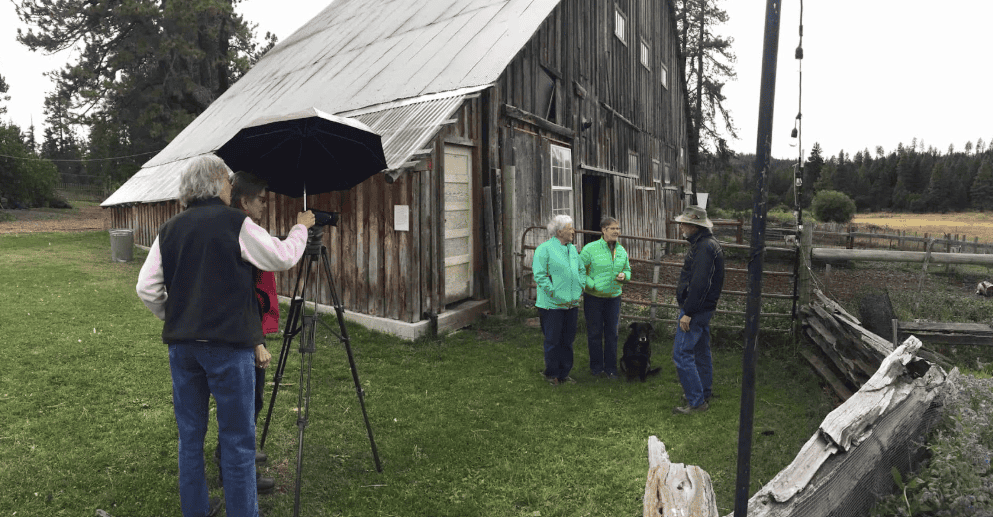
This documentary of interviews with community members from Southern Oregon was collectively created in 2017 by the team of Steve Dieffenbacher, Shannon Cornish, Teddie Hight, and Kathy Conway, with video and audio editing by Jereme Dittmer and Arlis Duncan. Project Leader was Liz Olson. The full length documentary runs 68 minutes, or it can be viewed as individual interviews.
Featured Interviews with:
- Dr. James Shames, Medical Director Jackson County Health Dept
- Dan Bish, Plant Oregon
- Nicoletta Dinelli, youth environmental activist
- Juan and Juan Jr. Escareño and Maricela Ruelas, farm workers
- Oregon Shakespeare Festival (Claudia Alick, Alison Carey)
- Jennifer Craugh (Teacher) & Amelia O’Skea (student), Ashland Middle School
- Sarah Spansail, mother
- Dr. Lanita Witt and Suzanne Willow, Willow-Witt Ranch
- Dan Wahpepah, Red Earth Descendants
Voices in the Valley – Exhibit
The exhibit portion of the Voices of the Valley project was created by Teddie Hight, in collaboration with the other members of the project team. Community members were interviewed as to their thoughts about climate change and were photographed in a variety of settings – such as at street fairs and at the Medford Grower’s Market, at an ESL fiesta for Spanish speakers, and at a senior living community. The exhibit is portable and has traveled the Jackson County Public Libraries. It is made up of poster boards as well as life-size standing posters. It is still available for public display, along with a hosted presentation of the documentary.
Interfaith Alliance