
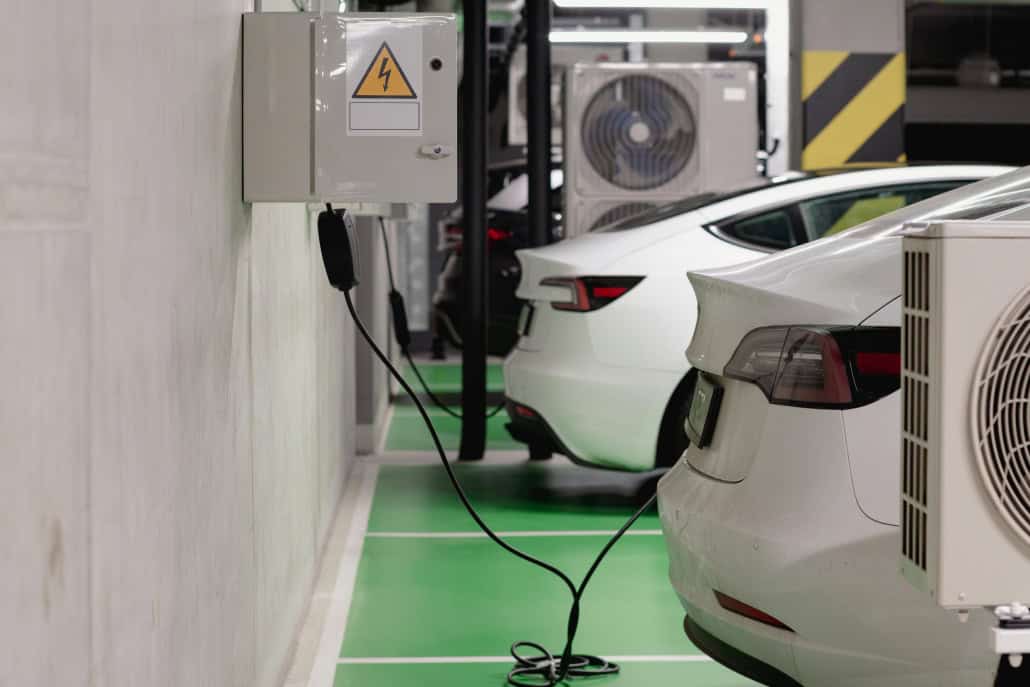
Photo courtesy of Jakub Zerdzicki

Alan R.P. Journet Ph.D.
Cofacilitator
Southern Oregon Climate Action Now
February 2nd 2025
Testimony in support of HB2961
Chair Lively and members of the House Committee on Climate, Energy and Environment
I write as cofacilitator of Southern Oregon Climate Action Now, an organization of some 2,000 Southern Oregonians who are concerned about the climate crisis and encourage state action to address it. As rural and coastal Southern Oregonians, we live on the frontlines of the warming, reducing snowpack, heatwaves, drought, rising sea level and the increasing wildfire risk that these trends conspire to impose on us. Because of this, we pay close attention to what is happening in the state legislature that relates to climate.
As we know, the main contributor to global warming and the climate chaos we are experiencing is the use of fossil fuels. We also know that the transportation sector, through the combustion of fossil fuels, is the largest contributor of regulated greenhouse gases in the state. Indeed, in 2021 the Transportation sector accounted for 35.29% of the 61.4 Million Metric Tons (MMT) of CO2e emissions (DEQ undated). In the U.S. Transportation accounted for 28% of emissions in 2022 (EPA undated) while globally, in 2023 at 21% of total emissions, this sector was second only to the power sector (Statista undated). We are also well aware that studies conducted on the full lifecycle of greenhouse gas emissions from Battery-powered Electric vehicles (BEVs) and Plug-in Hybrid Electric vehicles (PHEVs) compared to the conventional internal combustion engine vehicles indicate unequivocally that they are a substantial improvement (e..g., Verm et al. 2022; Save the Sound 2023; Reichmuth et al. 2023).
If, as the votes of Oregonians and the performance of the duly elected Oregon legislature indicates, Oregonians are committed to reducing our state’s contribution to the global climate crisis, it seems only reasonable and rational that the state should encourage, through incentives, behaviors that assist us in achieving this goal. Battaglia, (2024) made the case that incentives and availability of charging stations are critical factors promoting EV sales.
Additionally, as the Greenlining Institute (2025) notes: “With the current fluctuations in EV prices everyday consumers need financial subsidies to overcome the cost difference and incentivize them to buy an EV over a conventional car. This is especially true for people of color, who lack access to cars at higher rates than their white peers.” Incentives make electric vehicles, which overall are cheaper to operate and maintain, more available to low income Oregonians.
For these reasons, we strongly support efforts by legislators not only to provide incentives to Oregonians for purchasing electric-powered vehicles rather than internal combustion vehicles but also to encourage promotion of the requirements for charging capacity “in the garages or parking areas of newly constructed commercial buildings, multifamily buildings with five or more units and mixed-use buildings consisting of privately owned commercial space and five or more residential dwelling units” (OLIS 2025) as required in HB2961.
Respectfully Submitted
Alan Journet Ph.D.
7113 Griffin Lane
Jacksonville
OR 97530-4182
[email protected]
541-500-2331
541-301-4107
Battahglia D. 2024 Industry Voices | Government Incentives’ Impact on EV Sales. Ward’s Auto. https://www.wardsauto.com/fixed-operations/industry-voices-government-incentives-impact-on-ev-sales
DEQ undated Oregon Greenhouse Gas Sector-Based Inventory Data Oregon Department of Environmental Quality. https://www.oregon.gov/deq/ghgp/Pages/GHG-Inventory.aspx
EPA undated Fast Facts on Transportation Greenhouse Gas Emissions. Unted States Environmental Protection Agency https://www.epa.gov/greenvehicles/fast-facts-transportation-greenhouse-gas-emissions
Greenlining Institute 2025 Making Evs Affordable, The Greenlining Institute https://greenlining.org/electric-vehicles-toolkit/making-evs-affordable/
OLIS 2025 2025 Regular Session HB 2961. Oregon Legislative Information System https://olis.oregonlegislature.gov/liz/2025R1/Measures/Overview/HB2961
Statista undated Carbon dioxide emissions from the transportation sector worldwide from 1970 to 2023. Statista https://www.statista.com/statistics/1291615/carbon-dioxide-emissions-transport-sector-worldwide/
Reichmuth D, Dunn J, Anair d 2023 Driving Cleaner How Electric Cars and Pick-Ups Beat Gasoline on Lifetime Global Warming Emission. Union of Concerned Scientists. https://www.ucsusa.org/resources/driving-cleaner
Save the Sound 2023 Climate Explained: Life Cycle Analysis of Vehicles. Save the Sound; Action for our region’s environment. https://www.savethesound.org/2023/09/22/climate-explained-life-cycle-analysis/
Verma S, Dwivedi G, Verma P 2022 Life cycle assessment of electric vehicles in comparison to combustion engine vehicles: A review. Materials Today, Proceedings 49 (2); 217-222 https://www.sciencedirect.com/science/article/abs/pii/S221478532100763X


