
Fighting fire with facts
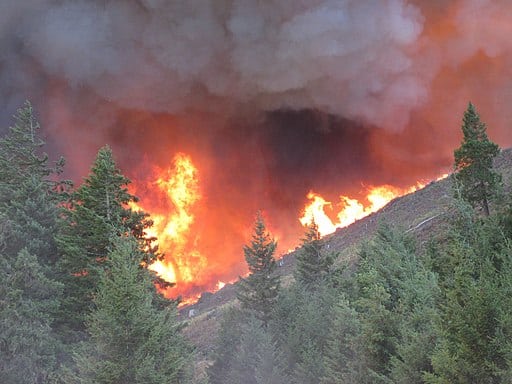
RIch Fairbanks, Ashland.news, May 8 2026
Here is a maddening irony: We now have solid science and decades of hard-won experience managing western wildfires, yet the issue of fire policy is becoming as polarized as the spotted-owl timber wars of the 1980s and ‘90s. Ideology is crowding out evidence at precisely the moment when getting this right matters most. So, let’s try something radical — a fact-based look at what peer-reviewed research actually tells us about controlling wildfire.
The status quo is not working
Fire seasons across the West are getting hotter and drier — that is not opinion, it is measurement.¹ Since record-keeping began in 1895, July maximum temperatures in Medford have climbed 2 degrees. Two degrees sounds trivial. We just nudge the thermostat. But for a forest, 2 extra degrees in July has a powerful drying effect, curing its fuels like a slow oven and setting the stage for larger, more ferocious fires.
California is already living in the future we are trying to avoid. Of the 20 largest wildfires in that state over the past century, 13 of them — two-thirds — have occurred since 2002.² Researchers studying California and western Nevada documented a striking increase in high-severity forest fires between 1984 and 2006, across a region exceeding 46,000 square miles.³ The 2014 National Climate Assessment projected that by the 2080s, the median annual area burned in the Northwest could quadruple relative to the 1916–2007 average, reaching two million acres.⁴


