
Climate Change Breaks Systems – Not Just Records

Daniel Scotton, Executive Director – March 20th
People suck at systematic thinking.
We’re wired to notice individual events and assign them simple explanations, even when those events are shaped by far more complex forces.
When we drive past a house for sale, we might assume the price reflects a beautiful interior. What we’re less likely to consider are the surrounding systems that actually shape value: nearby schools zoning rules, infrastructure quality, parks, fire risk, insurance availability, or local governance. Markets don’t exist in isolation–and neither do climate impacts.
Climate change suffers from this same misunderstanding.
We see a wildfire on a hillside. We notice smoke drifting across the valley. But we often miss the system behind it–the prolonged drought, beetle infestations, forest management practices, land-use decisions, and policy choices that made ignition inevitable. The smoke is visible; the system that produced it is not.
This pattern shows up across Southern Oregon’s economy.
Take housing. The Rogue Valley needs more homes to meet demand, yet climate conditions increasingly constrain our ability to build them. According to data from the Oregon Climate Change Research Institute, extreme heat days are rising year over year in Southern Oregon. Between 1980 and 1990, the region averaged roughly 54 days per year above 90°F. Between 2020 and 2024, that average rose to approximately 75 days.
Extreme heat doesn’t just make work uncomfortable–it slows or stops it altogether. Construction is particularly vulnerable. Research by Han et al. found that 60% of construction workers exposed to elevated temperatures experienced significant productivity loss, increasing project timelines and labor costs while raising serious health risks.
Smoke compounds the problem. Wildfire smoke worsens respiratory and cardiovascular conditions, increases hospital admissions, and keeps people home from work. According to the Center for Climate Integrity, wildfire smoke contributes to higher healthcare costs for asthma attacks and chronic illnesses–not only from local fires, but also from smoke traveling hundreds of miles, including from events as far away as Canada. These are economic losses that rarely appear in fire damage totals, yet quietly erode productivity and public health budgets.
The United Nations Office for Disaster Risk Reduction describes these effects as the “invisible costs” of wildfire disasters–lost workdays, health burdens, and supply disruptions, and economic drag that extend well beyond burn zones.
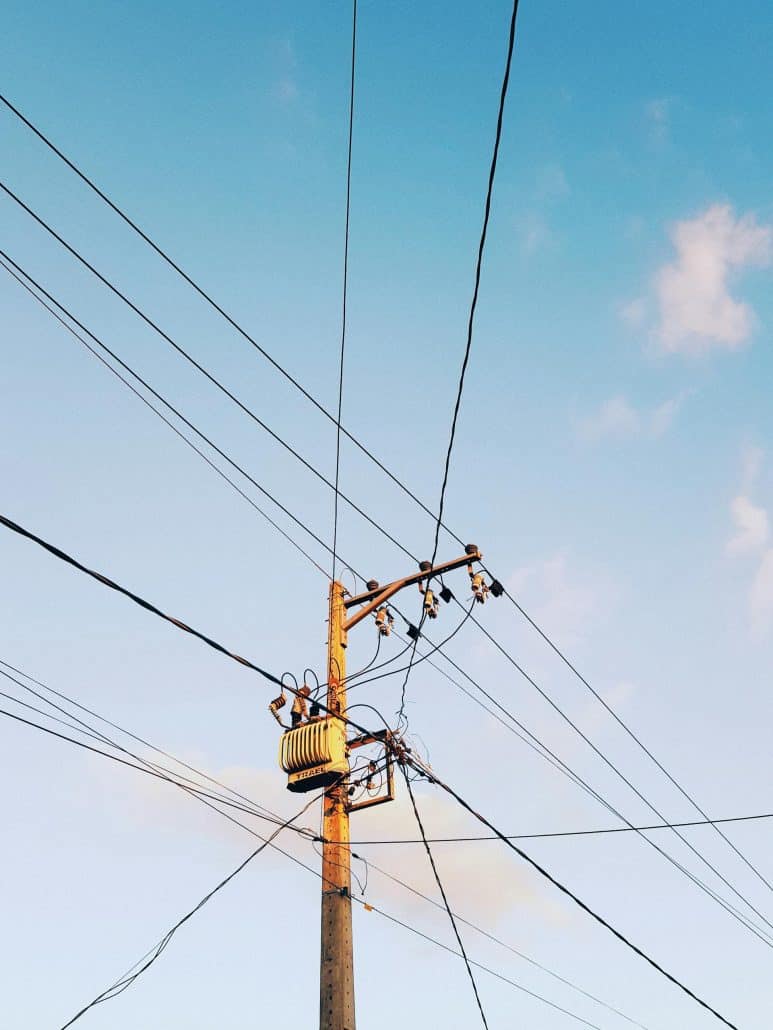
Infrastructure systems are also under strain.
Last summer, residents of Talent experienced repeated power shutoffs, implemented preemptively to reduce wildfire ignition risks. While inconvenient at first glance, these outages expose deeper vulnerabilities. Power loss affects medically vulnerable residents who rely on electrical equipment. Businesses lose revenue. Food spoils in refrigerators and freezers. Cooling systems fail during extreme heat events, creating public health risks.
If these conditions continue, communities will be forced to invest in more resilient infrastructure–upgraded power lines, hardened equipment, or even undergrounding transmission lines to reduce ignition risks. These investments are costly, but so is doing nothing. Rolling outages are not isolated inconveniences; they ripple through healthcare, commerce, and household stability.
All of this stems from that seemingly simple image: smoke on a hillside.
Climate change is not weather. A hot day or a smoky afternoon is not the problem, it is a symptom of the problem. Like smoke itself, what we see is only the visible edge of a much larger system at work.
Our responsibility is not to understand every variable at once. It is to recognize that the tree we see is part of a forest–and to take meaningful steps within our spheres of influence to shift the system toward resilience, stability, and long-term economic health.
Sources:
- Sixth Oregon Climate Assessment, Southern Oregon heat trends.
- Han, S. et al. Heat Exposure and Productivity Loss in Construction Workers.
- Center for Climate Integrity. The Costs of Climate Change: Wildfire Smoke and Health Impacts.
- United Nations Office for Disaster Risk Reduction. The Invisible Costs of Wildfire Disasters, 2025.


